Brown butter adds a rich, nutty flavor to everything from cookies to cakes. It’s surprisingly easy to make with just one ingredient and a few minutes on the stovetop. Here’s how to get it just right.
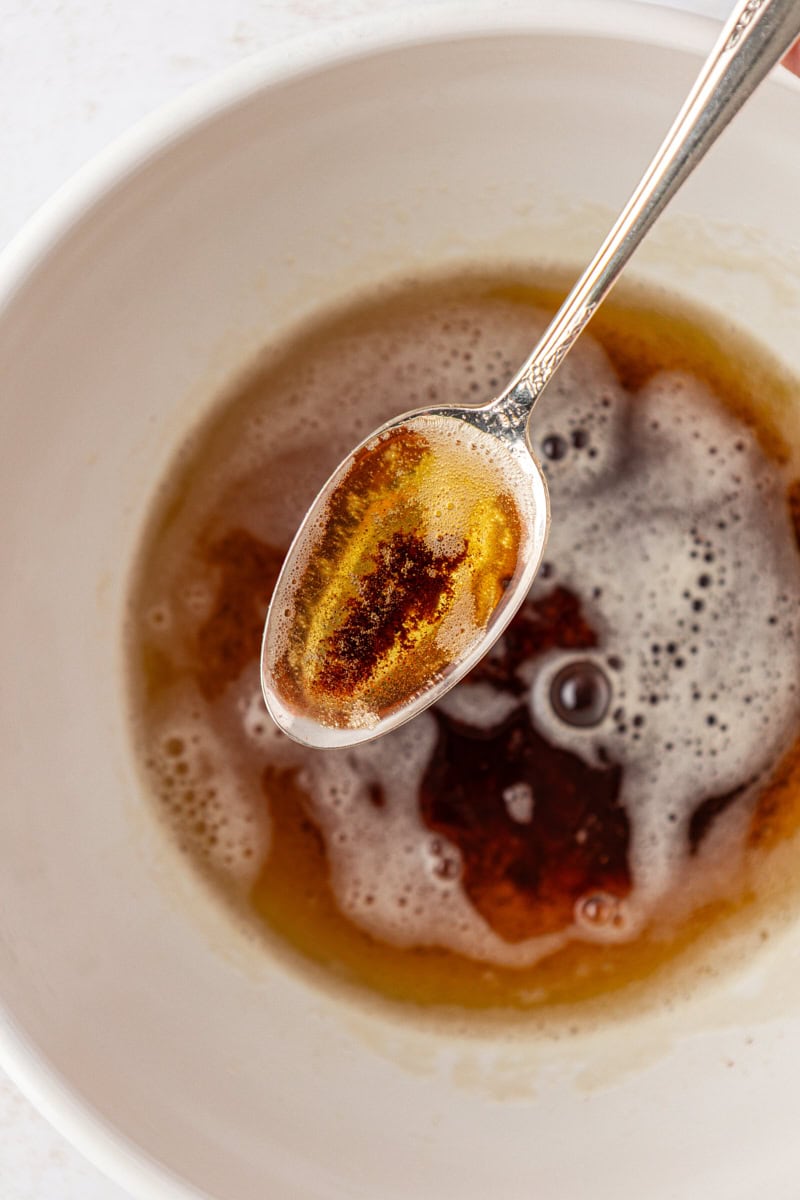
If you’ve never baked with brown butter, you’re in for a treat! Browning butter transforms its familiar buttery flavor into something deeper and toastier, with almost caramel-like notes. It’s a simple technique that can make an ordinary dessert taste a little more special.
And the best part? You don’t need any special ingredients or equipment. Just butter, a saucepan, and a little attention as it cooks.
What is Brown Butter?
Brown butter, also know as beurre noisette, is simply butter that’s been heated until its milk solids turn golden brown.
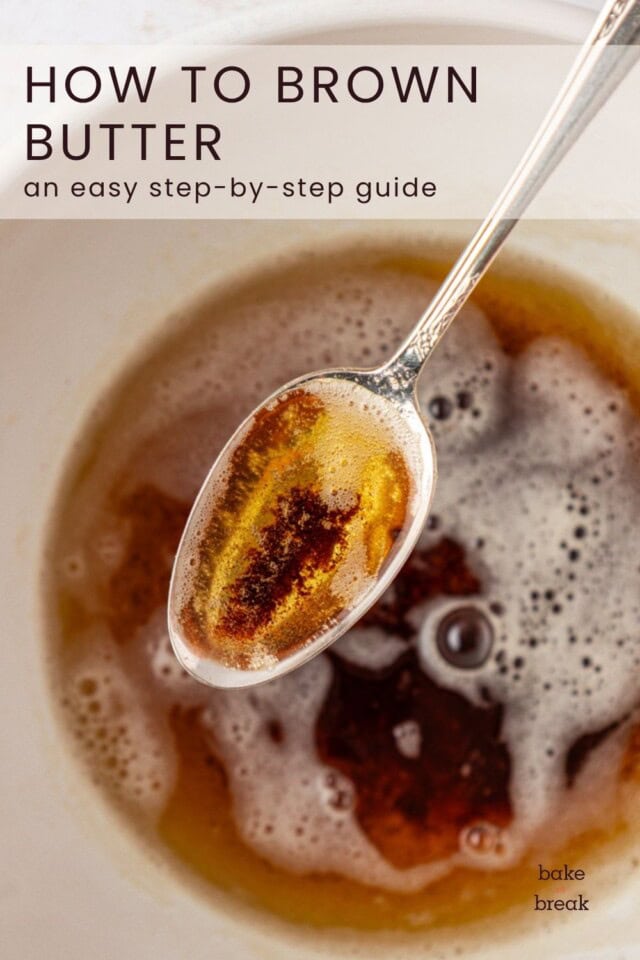
As the butter melts, its water begins to evaporate. The milk solids eventually toast, creating that distinctive nutty aroma and rich flavor. The finished butter has a beautiful amber color with little browned bits throughout.
It’s especially good in cookies, brownies, cakes, and other baked goods where you want to add another layer of flavor without adding extra ingredients.
How to Brown Butter
Browning butter is an easy process and usually takes about 5 to 10 minutes, depending on the amount of butter, your pan, and your stovetop. Watch for visual cues rather than relying on the clock. You’ll want to keep a close eye on it, especially toward the end. The butter can go from perfectly browned to burnt surprisingly quickly!
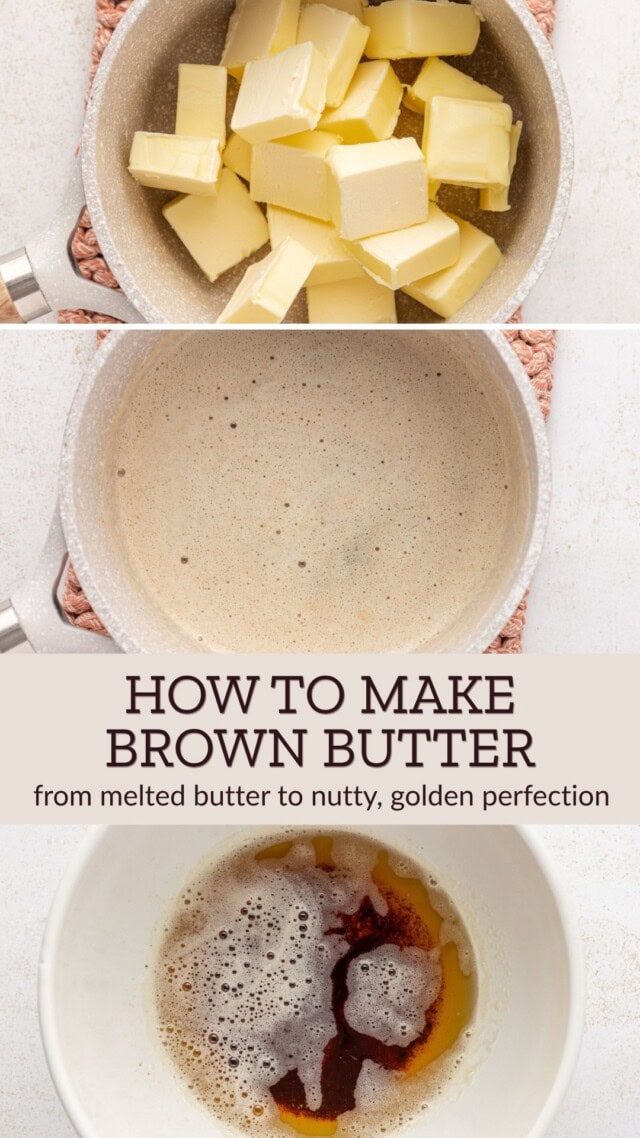
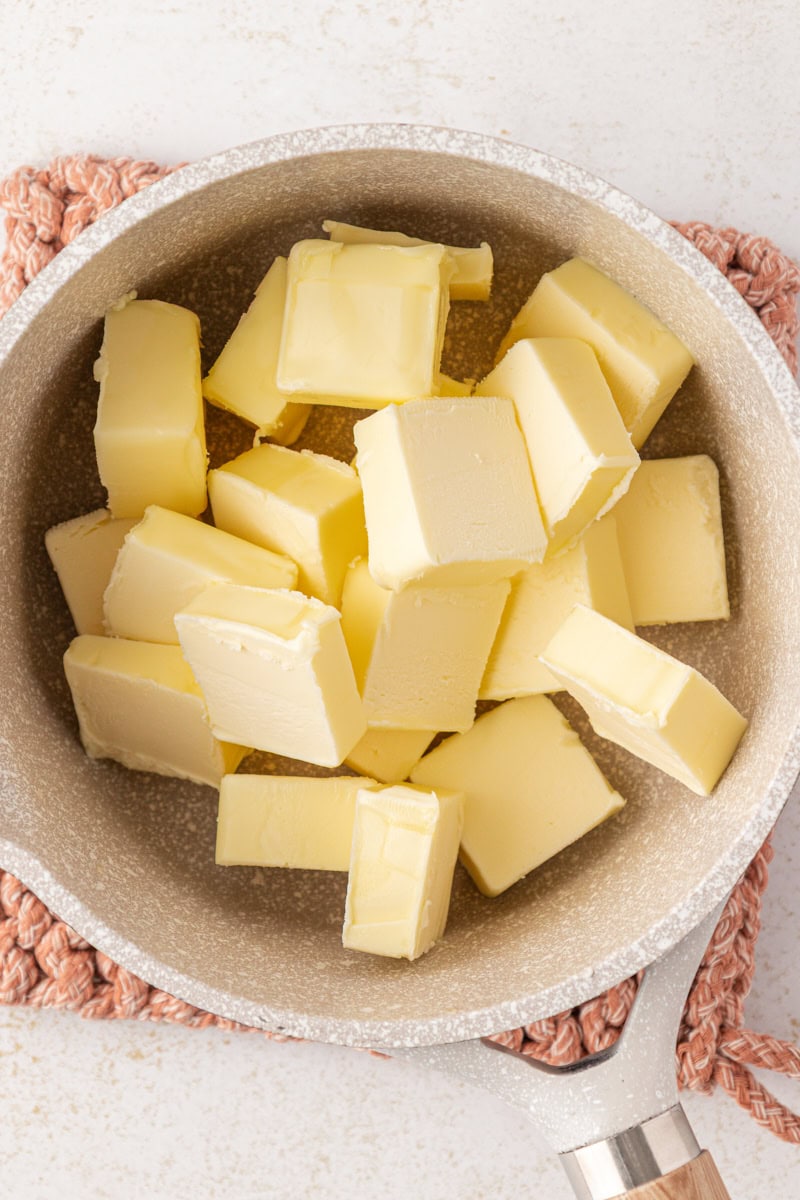
1. Melt the butter. Cut the amount of butter specified in your recipe into pieces and place it in a light-colored saucepan that’s large enough to accommodate the butter as it bubbles and foams. Cook over medium heat, stirring or swirling the pan occasionally, until the butter melts.
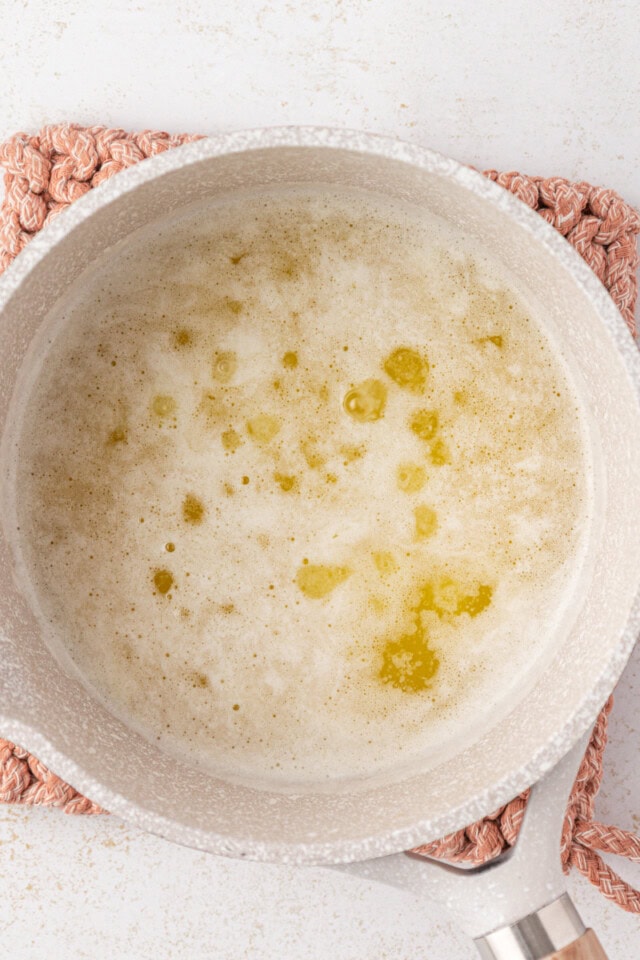
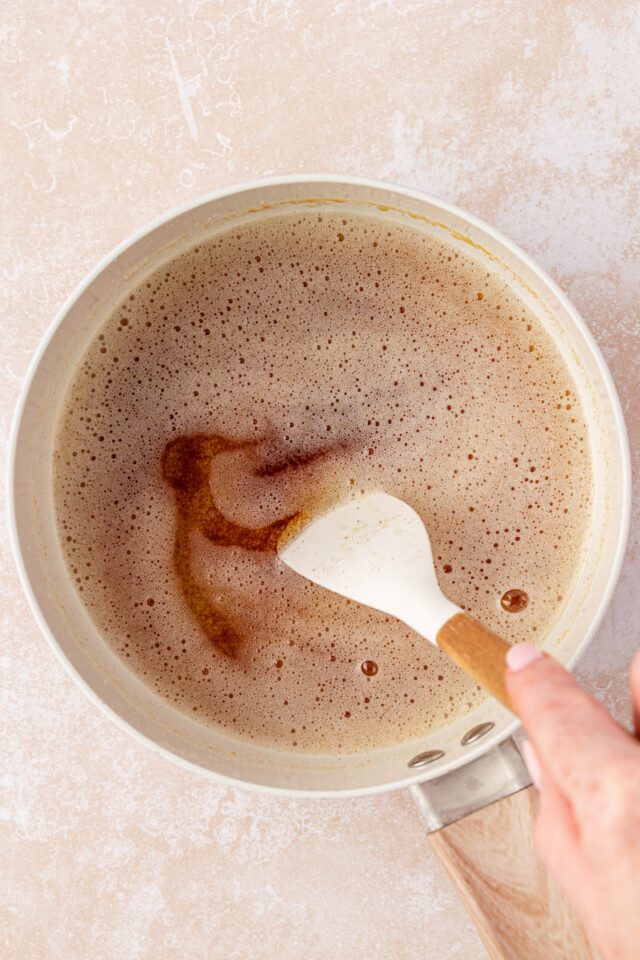
2. Let it foam and bubble. Continue cooking over medium heat. The butter will sizzle and develop a layer of foam as its water evaporates. Stir or swirl occasionally to keep the milk solids moving.
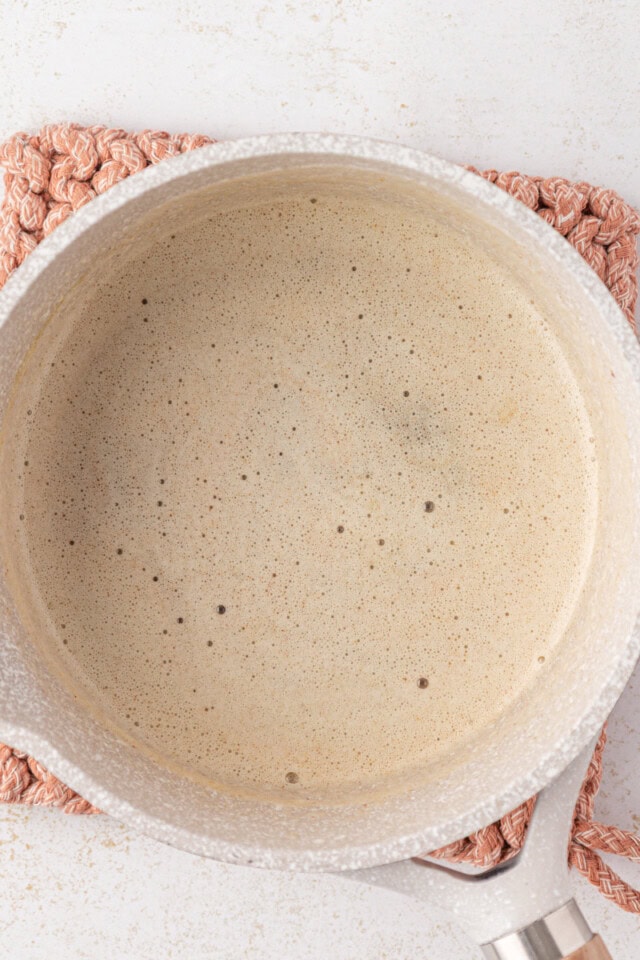
3. Watch for the butter to brown. As the sizzling slows, the milk solids at the bottom of the pan will begin turning golden brown. The butter will develop an amber color and a rich, nutty aroma. Stir more frequently at this stage, moving the foam aside with a spatula if needed to check the color of the milk solids. Watch closely so the butter doesn’t burn.
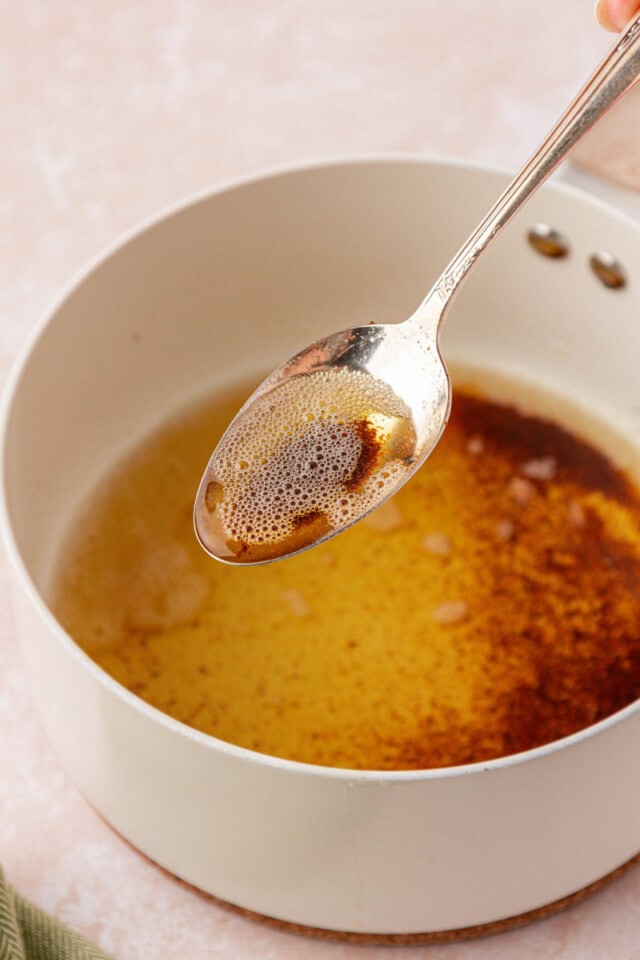
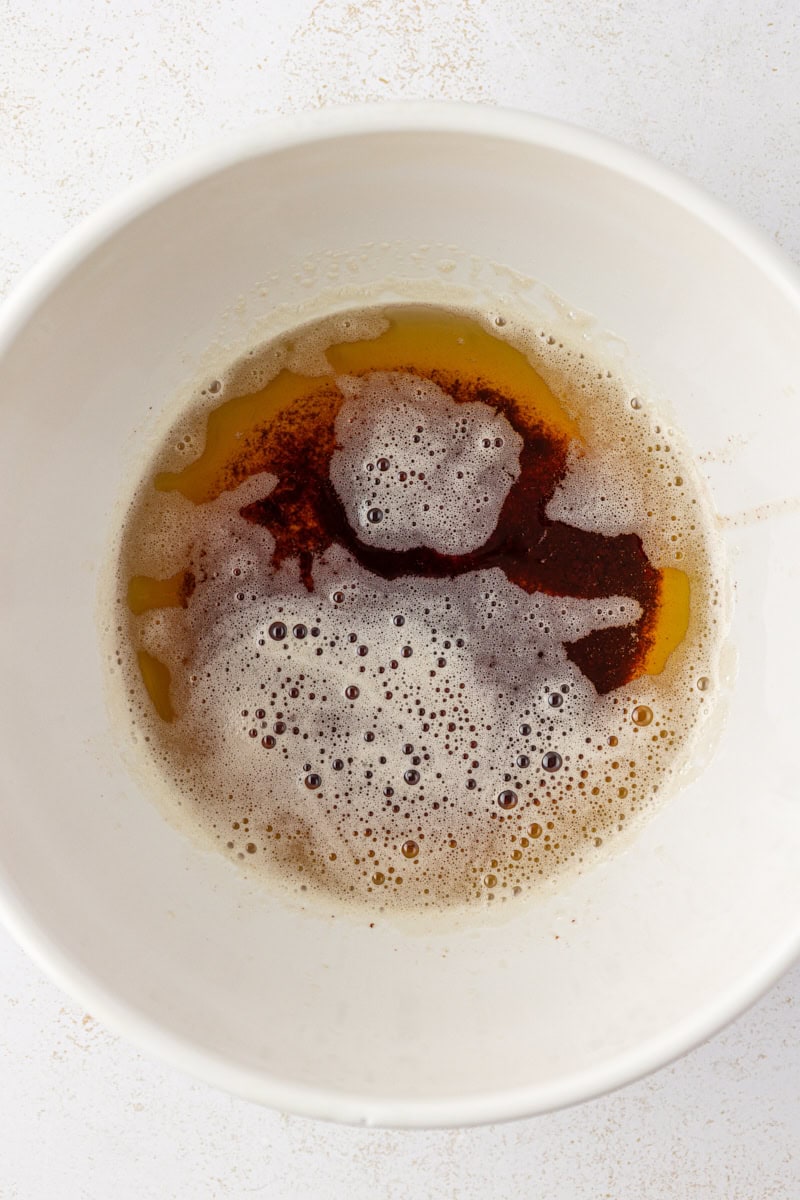
4. Remove from the heat. As soon as the butter is browned and smells nutty, immediately pour it into a heatproof bowl to stop the cooking. Scrape in all those browned bits, too! Let the butter cool to the temperature or consistency specified in your recipe.
Tips for Perfect Brown Butter
- Use a light-colored pan if possible. It’s much easier to judge the color of the milk solids against a light background.
- Keep the heat at medium. You want the butter to brown gradually enough that you can keep track of its progress.
- Pay attention to the aroma. The butter will develop a noticeably nutty, toasted smell as it browns. That’s one of the best signs that it’s ready.
- Don’t walk away. The first part of the process may seem slow, but the butter can brown very quickly near the end.
- Transfer it promptly. Butter continues cooking in a hot saucepan even after you’ve turned off the heat. Moving it to another bowl or container helps prevent burning.
Brown Butter Troubleshooting
Why is my butter taking so long to brown?
The cooking time depends on how much butter you’re using, the size of your saucepan, and your stovetop. The water in the butter needs time to evaporate before the milk solids can brown. If it’s barely bubbling, you may need to increase the heat slightly.
How can I tell if I’ve burned it?
Brown butter should smell pleasantly nutty, with golden to medium-brown bits. If those bits turn black or the butter develops a sharp, burnt smell, it’s gone too far.
Can I fix burnt butter?
Unfortunately, there’s no good way to remove the bitter flavor once the milk solids have burned. Your best option is to start again.
Using Brown Butter in Baking
Brown butter adds a wonderful toasted, nutty flavor to cookies, brownies, cakes, and more. There are just a couple of things to keep in mind when baking with it.
Can you substitute brown butter for regular butter?
Sometimes, but it’s not always a straightforward swap. Butter contains water, and some of that water evaporates during browning. That loss of moisture can affect the texture of baked goods, particularly in recipes where the balance of ingredients matters.
For the most reliable results, use a recipe that specifically calls for brown butter. That way, you won’t need to worry about adjusting the ingredients.
Does brown butter need to cool before baking?
That depends on the recipe. Some recipes use brown butter while it’s still liquid, while others call for it to cool or solidify before mixing it with the other ingredients.
Follow the recipe’s instructions rather than assuming the butter can be used straight from the saucepan. Its temperature and consistency can make a difference in the finished texture.
Make-ahead tip: While you’ll normally brown butter as you need it for baking, you can also brown butter ahead of time. Let it cool, then refrigerate it in an airtight container until you’re ready to bake. Bring it to the temperature or consistency your recipe requires, and be sure to include those flavorful browned bits.
Put Your Brown Butter Skills to Use
Now that you know how to brown butter, you’re ready to try it in your baking! Brown butter brings a rich, toasted flavor to all kinds of desserts, from simple cookies to cakes and brownies.
For a little inspiration, browse my collection of brown butter recipes. Each one is developed to make the most of that wonderful nutty flavor.