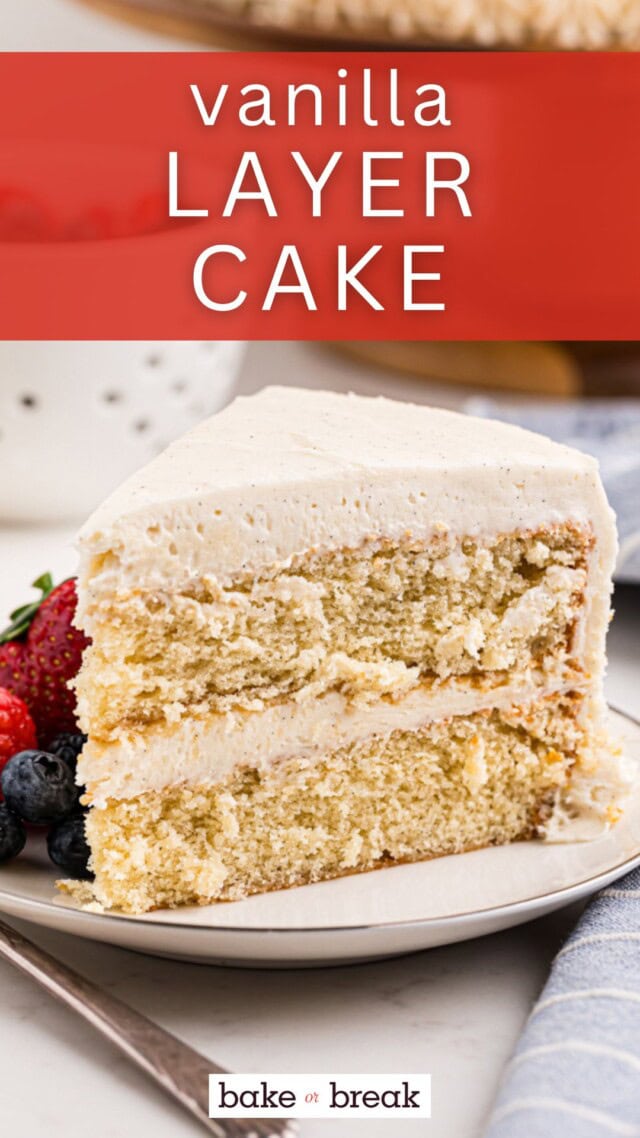
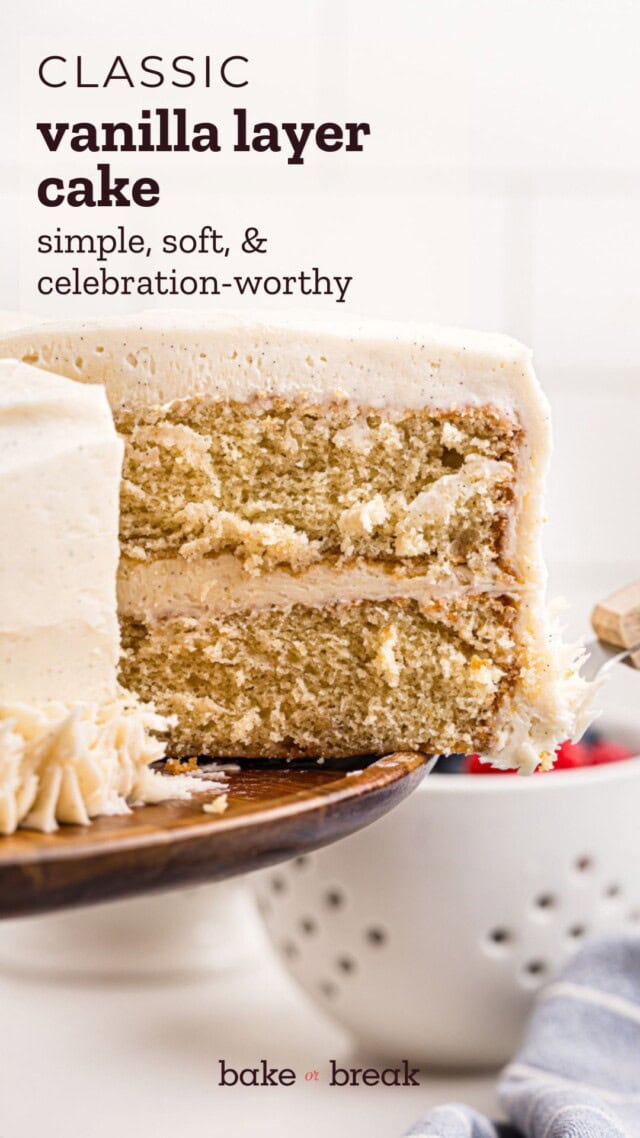
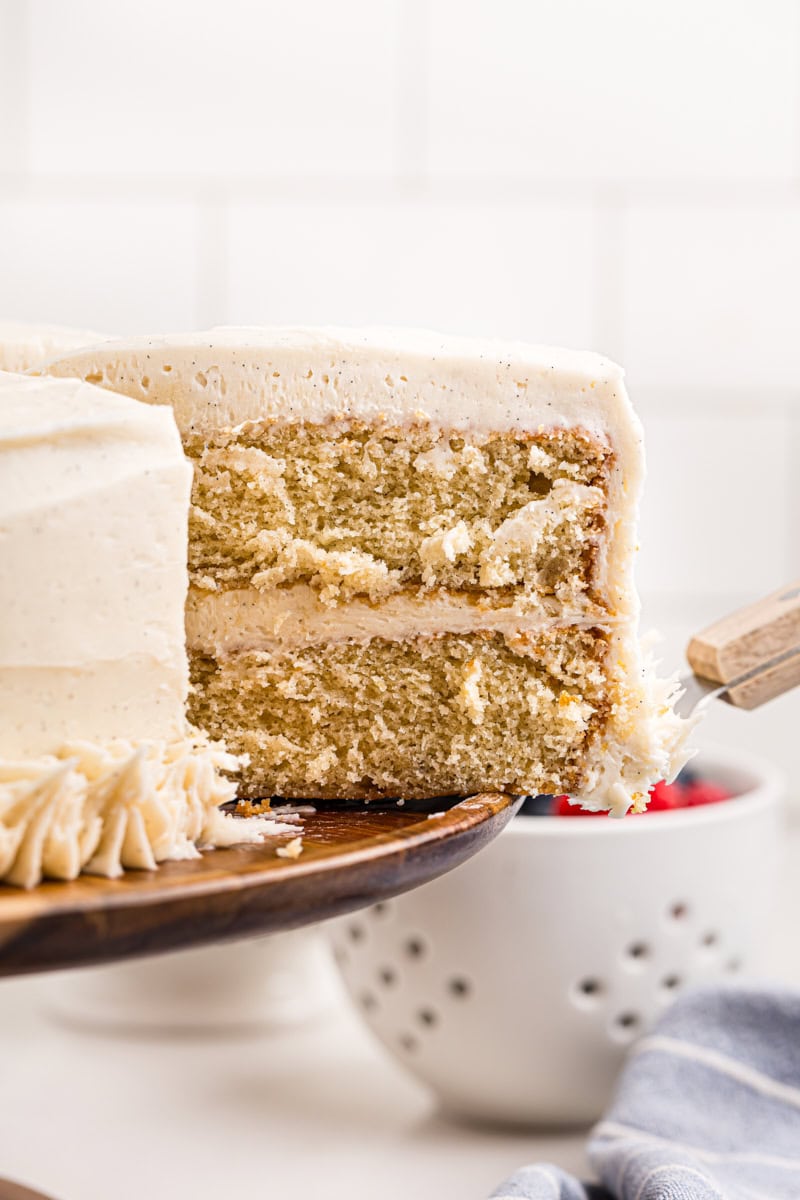
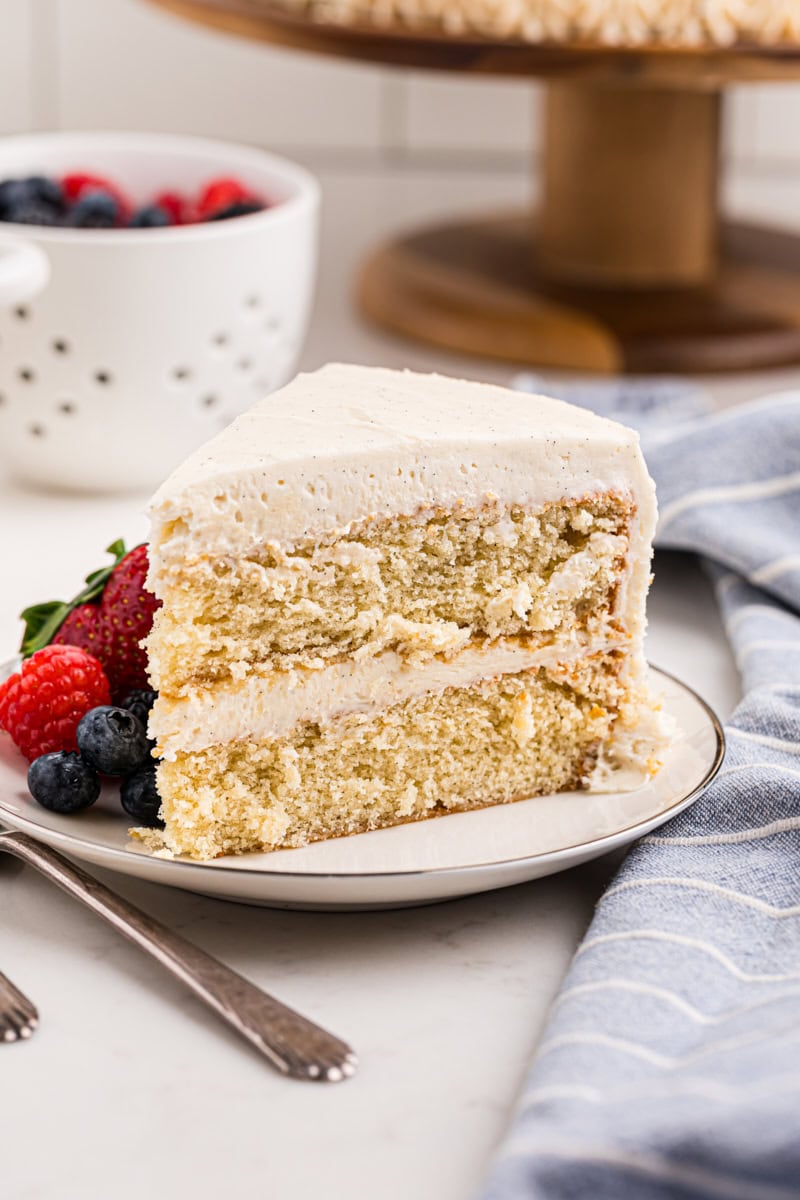
This is the kind of vanilla layer cake every baker needs in their recipe box. Soft, buttery cake layers and fluffy vanilla frosting make it perfect for birthdays, celebrations, or anytime you want a classic cake that simply delivers.
Some recipes are all about surprise flavors or elaborate decorating. This isn’t one of them.
This vanilla layer cake keeps things familiar in the very best way. The cake layers bake up soft and tender with rich vanilla flavor, while the fluffy frosting keeps the whole cake classic, simple, and endlessly crowd-pleasing. It’s the kind of cake that feels just as right for birthdays and celebrations as it does for a casual weekend gathering.
And while it looks polished, the recipe itself is refreshingly straightforward. No complicated techniques, no specialty ingredients, and no fussy decorating required.
Why You’ll Love This Vanilla Layer Cake
- Soft, tender cake layers. Butter, oil, and buttermilk work together for a cake that’s flavorful and stays moist.
- Rich vanilla flavor. Vanilla bean paste gives the cake and frosting a warm vanilla flavor with those pretty specks throughout.
- Classic and versatile. Dress it up for birthdays or keep it simple with a clean finish. Even if you don’t decorate cakes often, this recipe is very manageable and forgiving.
- Easy to make. No complicated mixing methods or decorating skills needed.
- A true go-to layer cake. Reliable, approachable, and endlessly adaptable.
Key Ingredients
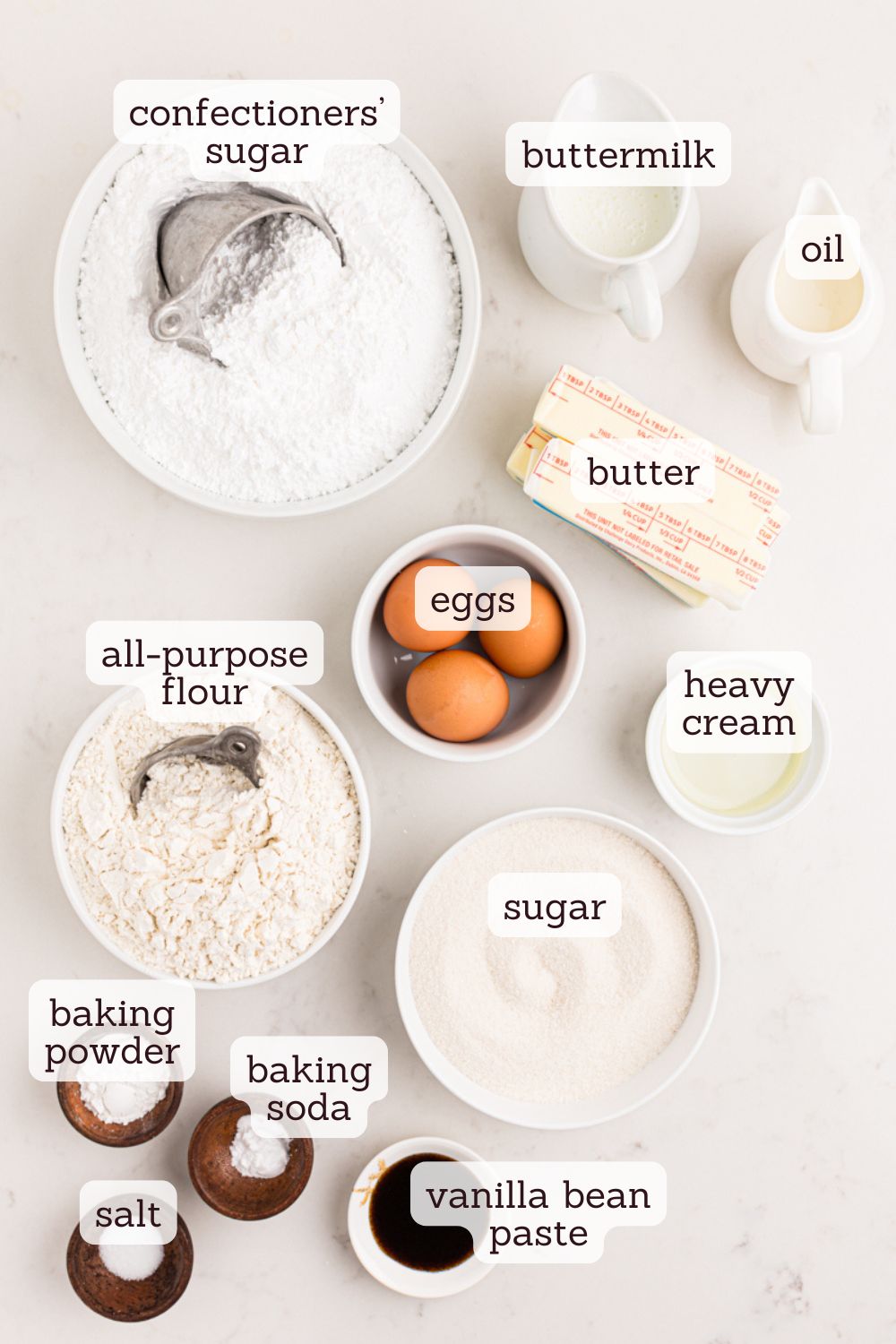
- Vanilla bean paste – Vanilla bean paste gives this cake its rich vanilla flavor and those beautiful specks throughout the cake and frosting. Vanilla extract works, too, but vanilla bean paste adds a little extra depth and those vanilla bean specks throughout the cake and frosting.
- Butter + oil – Using both gives you the best of both worlds: buttery flavor from the butter and extra softness and moisture from the oil.
- Buttermilk – Buttermilk keeps the cake tender and adds a subtle tang that balances the sweetness.
- Vanilla frosting – The frosting is classic American-style buttercream, but beating it well keeps it fluffy and smooth instead of overly dense or sweet.
How to Make Vanilla Layer Cake
Prepare the pans well.
Grease the pans thoroughly and line the bottoms with parchment paper. Layer cakes release much more cleanly this way, and parchment helps prevent sticking or tearing when turning the cakes out of the pans.
Whisk the dry ingredients separately.
Whisking the flour, baking powder, baking soda, and salt together before mixing helps distribute the leavening evenly throughout the batter. It’s a simple step that helps the cake bake evenly with a consistent crumb.
Cream the butter and sugar until truly fluffy.
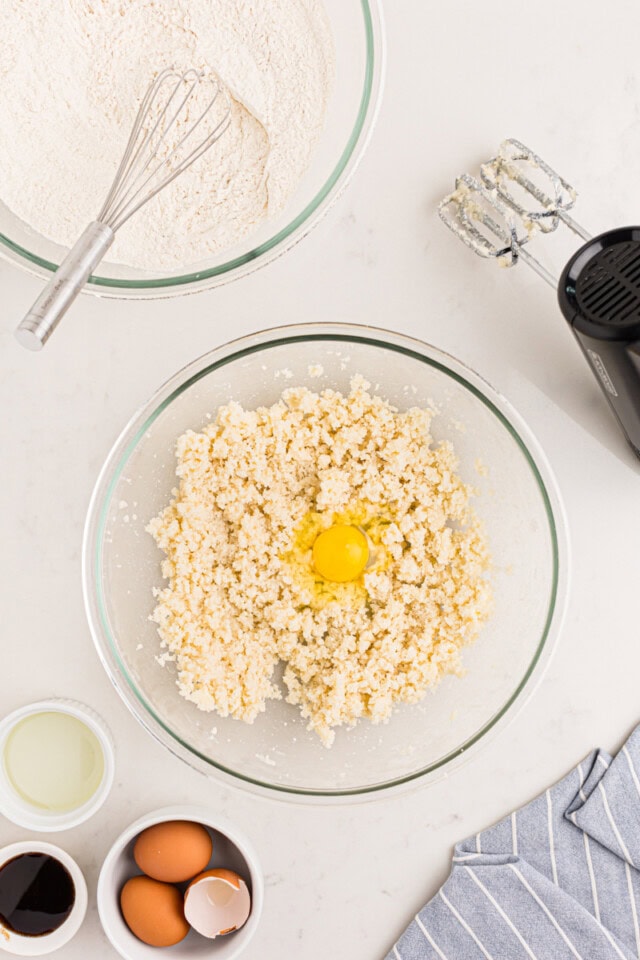
Don’t rush this step. Beating the butter and sugar for several minutes creates a lighter texture and helps the cake bake up soft and tender. The mixture should look noticeably paler and fluffier before moving on.
Add the eggs one at a time.
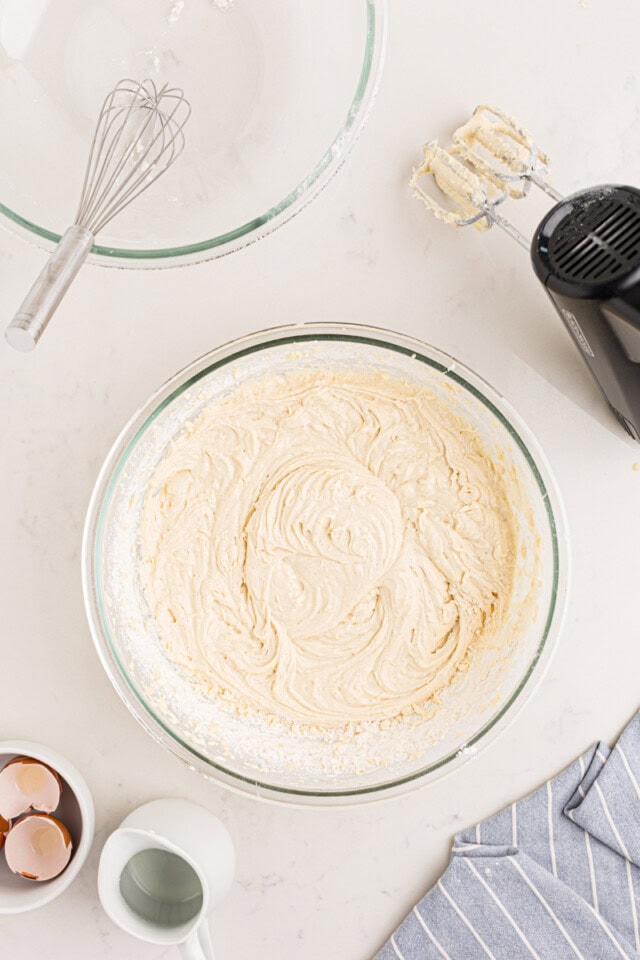
Mixing in the eggs gradually helps the batter stay smooth and emulsified instead of curdled or separated. Once the eggs are incorporated, mix in the vanilla bean paste and oil until the batter looks smooth and creamy.
Alternate the dry ingredients and buttermilk.
Adding the flour mixture and buttermilk in portions helps keep the batter smooth without over-mixing. Mix just until combined after each addition. The finished cake batter should be thick, smooth, and easy to spread evenly in the pans.
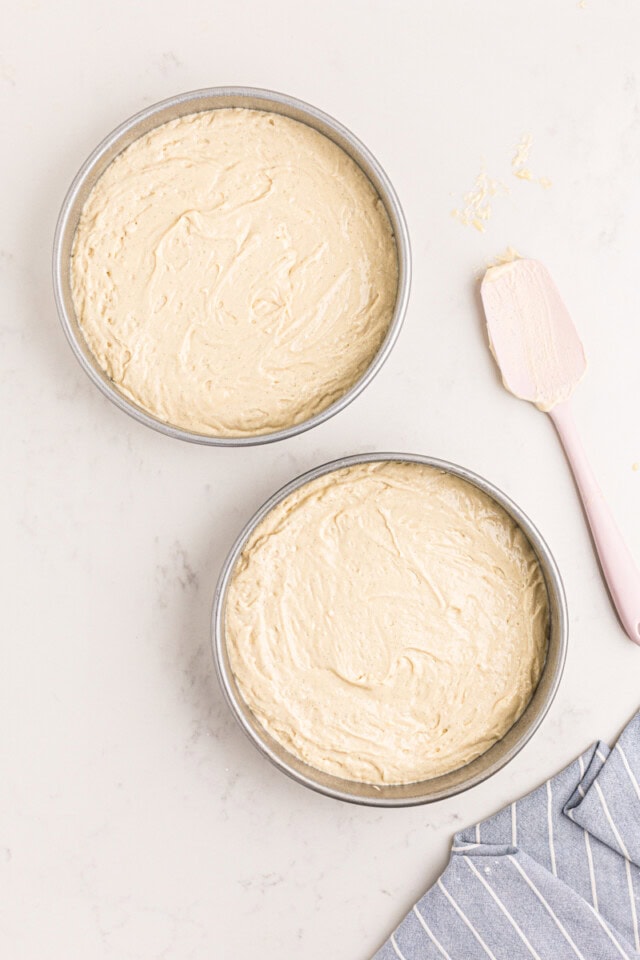
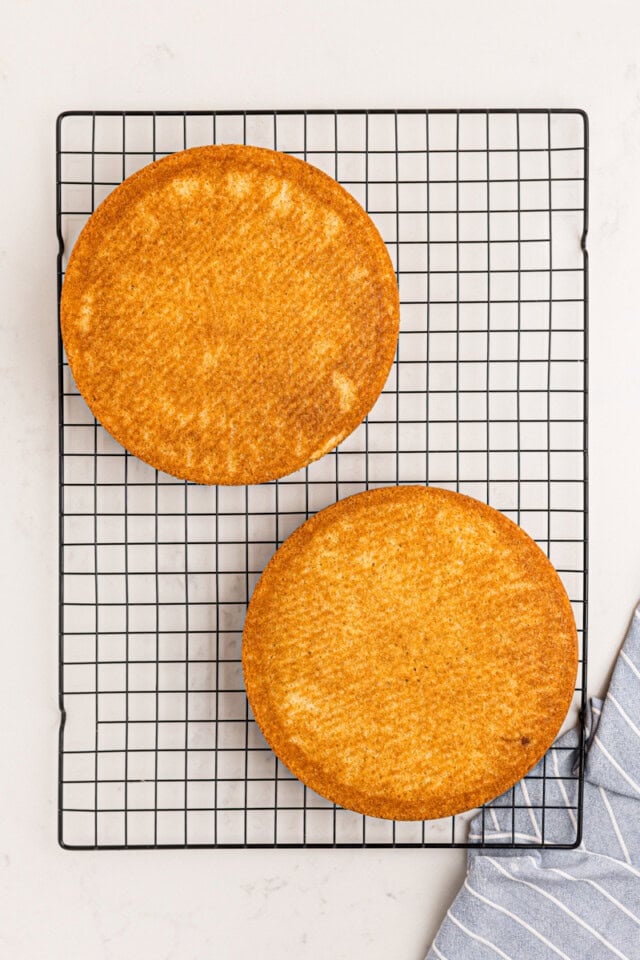
Bake just until done.
The cakes are ready when the tops spring back lightly when touched and the edges are lightly golden. Try not to over-bake, as vanilla cakes can dry out quickly if left in the oven too long.
Cool completely before frosting.
Let the cakes cool in the pans briefly before turning them out onto a wire cooling rack. Once the layers are completely cool, you’re ready to frost. Even slightly warm cake layers can melt the frosting and make assembly messy.
Use a crumb coat for a cleaner finish.
A thin crumb coat traps loose crumbs and gives you a smoother final layer of frosting. If the frosting starts feeling soft while decorating, chill the cake for 15 to 20 minutes before adding the final coat.
Keep the decorating simple.
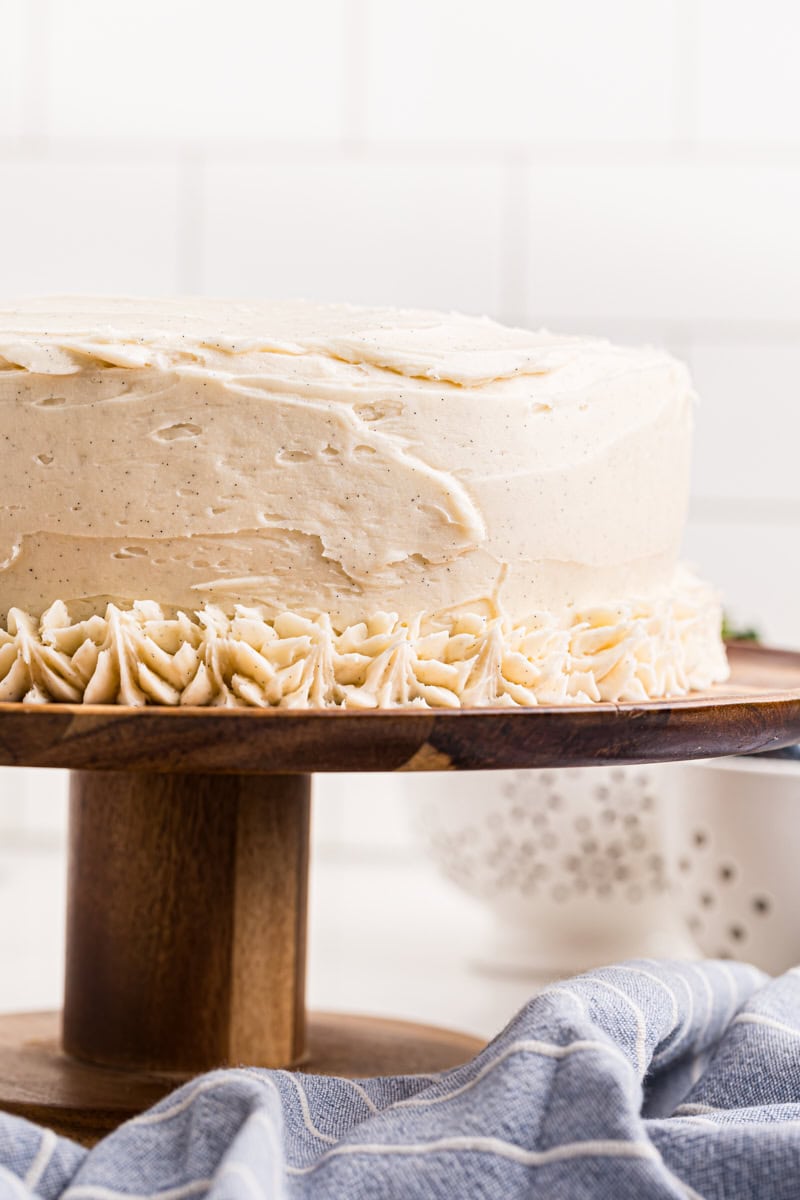
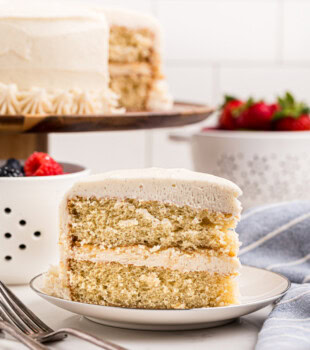
This cake looks beautiful with a smooth finish and soft swoops of frosting on top. You can absolutely add piping or sprinkles for a more decorated look, but it’s just as lovely with a simple, classic finish.
Tips for Success
- Use softened or room temperature ingredients for a smoother batter and more even texture.
- Weigh the flour if possible to avoid adding too much and ending up with a dry cake. You can learn more about why this matters in my guide to measuring flour.
- Cool the cake layers completely before frosting.
- Beating the frosting for several minutes after adding the cream makes it noticeably lighter and fluffier.
- Chill after the crumb coat if the frosting starts to soften while decorating.
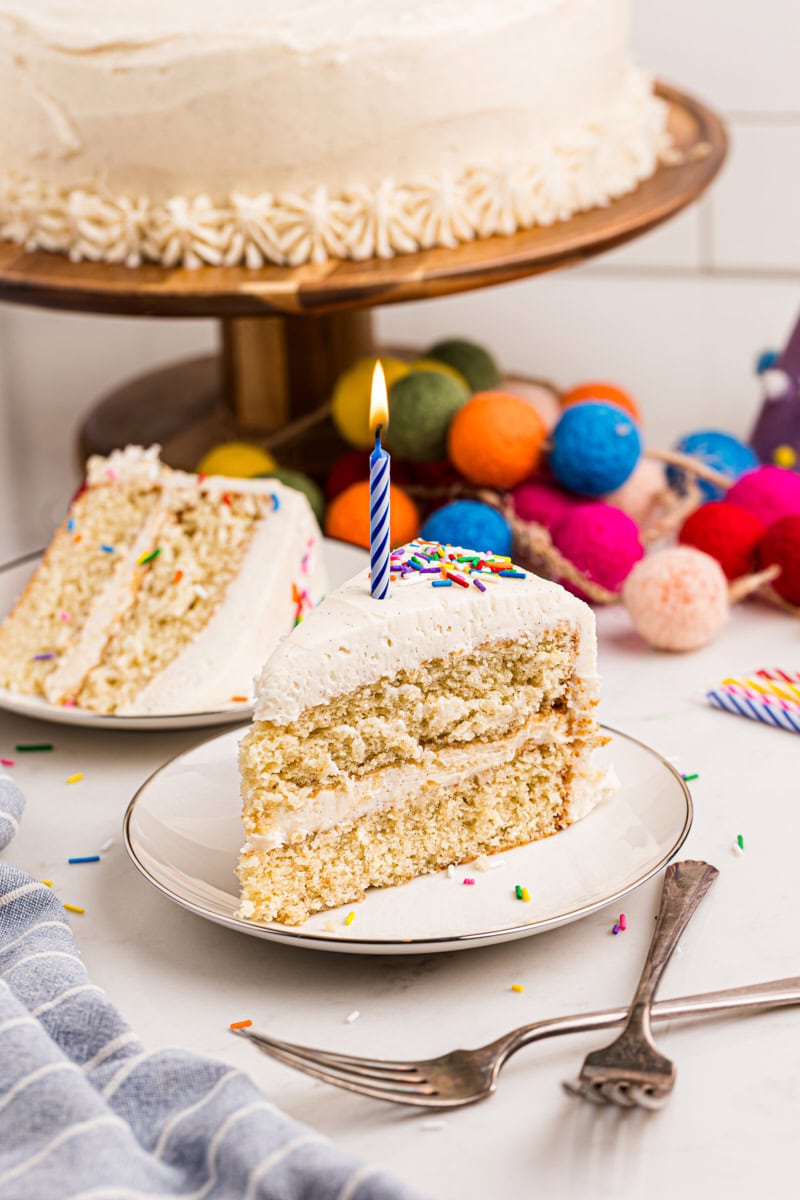
- For the cleanest slices, chill the cake briefly before serving and wipe the knife clean between cuts.
Variations and Serving Ideas
This cake is wonderfully timeless on its own, but it’s easy to customize.
- Add sprinkles for a birthday cake feel
- Top with fresh berries for a simple seasonal finish
- Add a little lemon or orange zest to the batter or frosting
- Decorate with chocolate curls or white chocolate shavings
You can also keep the decorating simple with soft swoops of frosting or add piping for a more polished look.
How to Store
The frosted cake can be covered and stored at room temperature for up to 1 day or refrigerated up to 4 days. For the best texture, let refrigerated cake sit at room temperature for a bit before serving.
Unfrosted cake layers can be wrapped tightly and frozen up to 2 months. The frosted cake can also be frozen in slices or whole once the frosting is firm.
A Classic Vanilla Cake for Any Celebration
Whether you’re baking for a birthday, a family gathering, or simply because you’re craving a really good vanilla cake, this recipe keeps things simple in the best possible way. The soft cake layers, fluffy frosting, and timeless vanilla flavor make it the kind of dessert that feels timeless and always welcome.
If you enjoy traditional cakes like this one, you might also like my everyday vanilla bean cake, yellow cake with chocolate frosting, vanilla sheet cake, or chocolate sheet cake.
More Layer Cake Recipes
Vanilla Layer Cake
Ingredients
For the cake:
- 2 ½ cups (300 g) all-purpose flour
- 2 ½ teaspoons baking powder
- ½ teaspoon baking soda
- ½ teaspoon salt
- ¾ cup (170 g) unsalted butter, softened
- 1 ¾ cups (350 g) granulated sugar
- 3 large eggs, at room temperature
- 1 tablespoon (15 ml) vanilla bean paste, or vanilla extract
- ¼ cup (60 ml) vegetable or canola oil, or other neutral oil
- 1 cup (240 ml) buttermilk, at room temperature
For the frosting:
- 1 ¼ cups (283 g) unsalted butter, softened
- 4 cups (440 g) confectioners’ sugar, sifted recommended
- 1 tablespoon (15 ml) vanilla bean paste, or 2 teaspoons (10ml) vanilla extract
- ¼ teaspoon salt
- 2 to 3 tablespoons (30 to 45 ml) heavy cream
Recommended Products
Instructions
To make the cake:
- Preheat the oven to 350°F (175°C). Grease and line two 8-inch round pans.
- Whisk together the flour, baking powder, baking soda, and salt. Set aside.
- In a large bowl, beat the butter and sugar with an electric mixer on medium speed until light and fluffy (3-4 minutes).
- Add the eggs one at a time, mixing well after each addition. Mix in the vanilla, followed by the oil.
- With the mixer on low speed, add the flour mixture in three portions, alternating with two portions of buttermilk. Mix just until combined.
- Divide the batter evenly between the two pans, and spread evenly.
- Bake 28 to 32 minutes, or until the edges are lightly golden and the tops spring back when touched.
- Cool in the pans for 10-15 minutes. Then flip onto a wire rack to cool completely.
To make the frosting:
- Using an electric mixer on medium speed, beat the butter until creamy and lighter in color (2-3 minutes).
- With the mixer on low speed, add the confectioners' sugar gradually. Once incorporated, increase speed to medium and mix until smooth.
- Mix in the vanilla and salt.
- Add 2 tablespoons cream and mix on medium-high for 2-3 minutes. Add more cream, a little at a time, until the frosting is smooth and spreadable.
- Frost the top of one cooled cake layer. Place the other layer on top, and apply a crumb coat to the top and sides. Then add the final coat. (For a more decorated look, save some frosting to pipe a border or some simple swirls.)
Notes
- Vanilla options: Vanilla extract can be substituted for the vanilla bean paste in both the cake and frosting. The vanilla bean paste adds a slightly richer flavor and visible vanilla bean specks.
- Frosting texture: For a softer, swoopier frosting, you’ll likely need that extra tablespoon of cream. For a firmer frosting for piping decorations, use closer to 2 tablespoons cream.
- Decorating note: This recipe makes enough frosting to fill the cake, apply a light crumb coat, and finish with a smooth outer layer. For more elaborate piping or thicker frosting layers, consider increasing the frosting by about 25%.
- Storage: Keep in an airtight container at room temperature for 1 day or refrigerate for 4 days.
- Storage note: For the best texture and flavor, let refrigerated cake sit at room temperature for a short time before serving.